Notícias, análises e bastidores sobre a vida policial na Califórnia. Conteúdo direto, sem enrolação — feito por quem vive isso todos os dias.
 Training & Career
In Brazil, tactical units put out a call and no volunteers show up. In the United States, departments still get applicants, but struggle with quality. Two police officers from Brazil's Federal District and the hosts of Palavrão Tático compare two sides of the same phenomenon.
 Behind the Badge
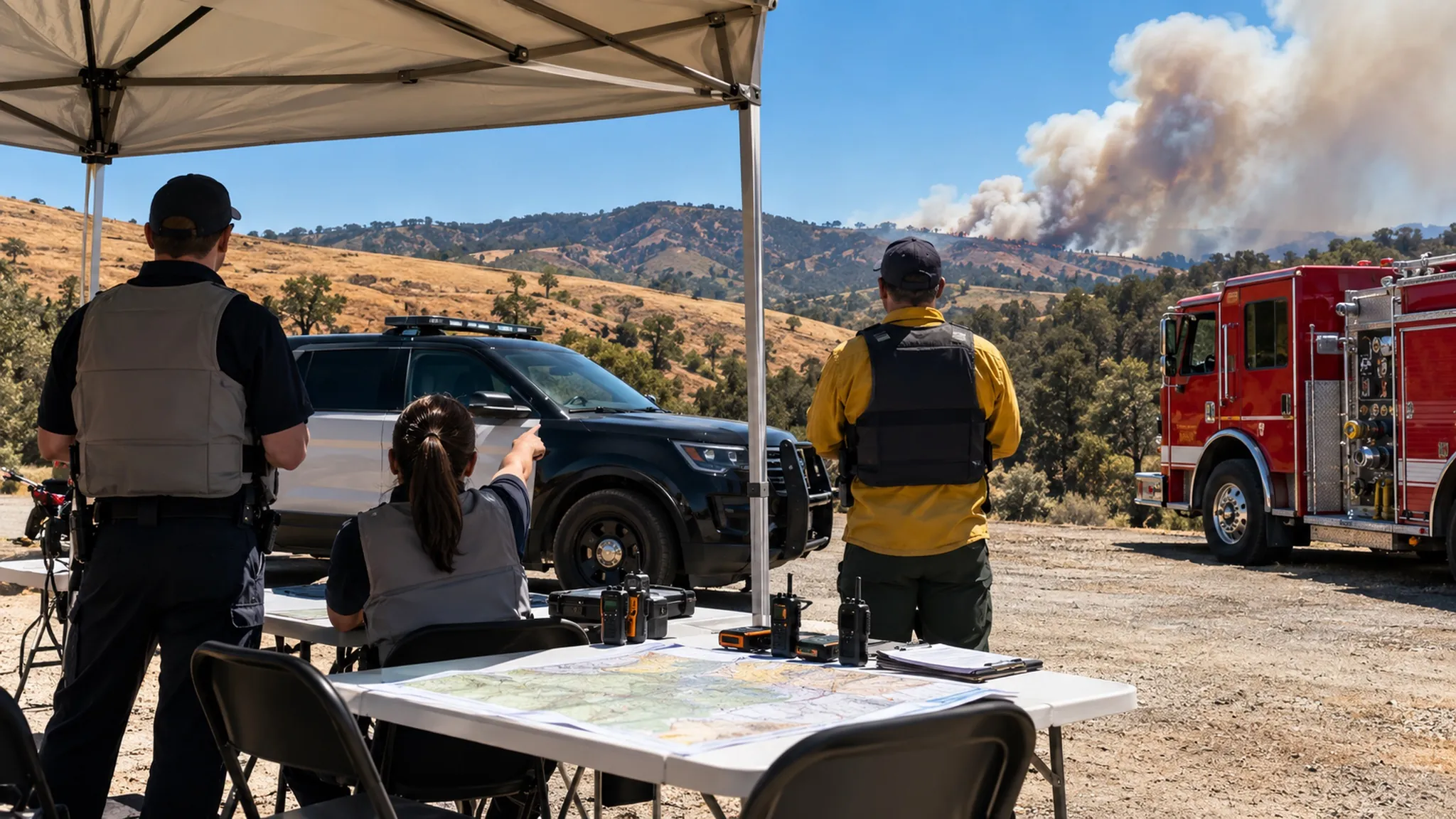
Police officers and firefighters from across the country arrived at the World Trade Center without knowing who was in charge. The answer to that chaos was to turn into a national standard a system California had been using since the 1970s against wildfires — ICS, which in Brazil became SCI. The hosts of Palavrão Tático and two police officers from Brazil's Federal District talk about where it came from and why it matters.
 Ethics & Conduct
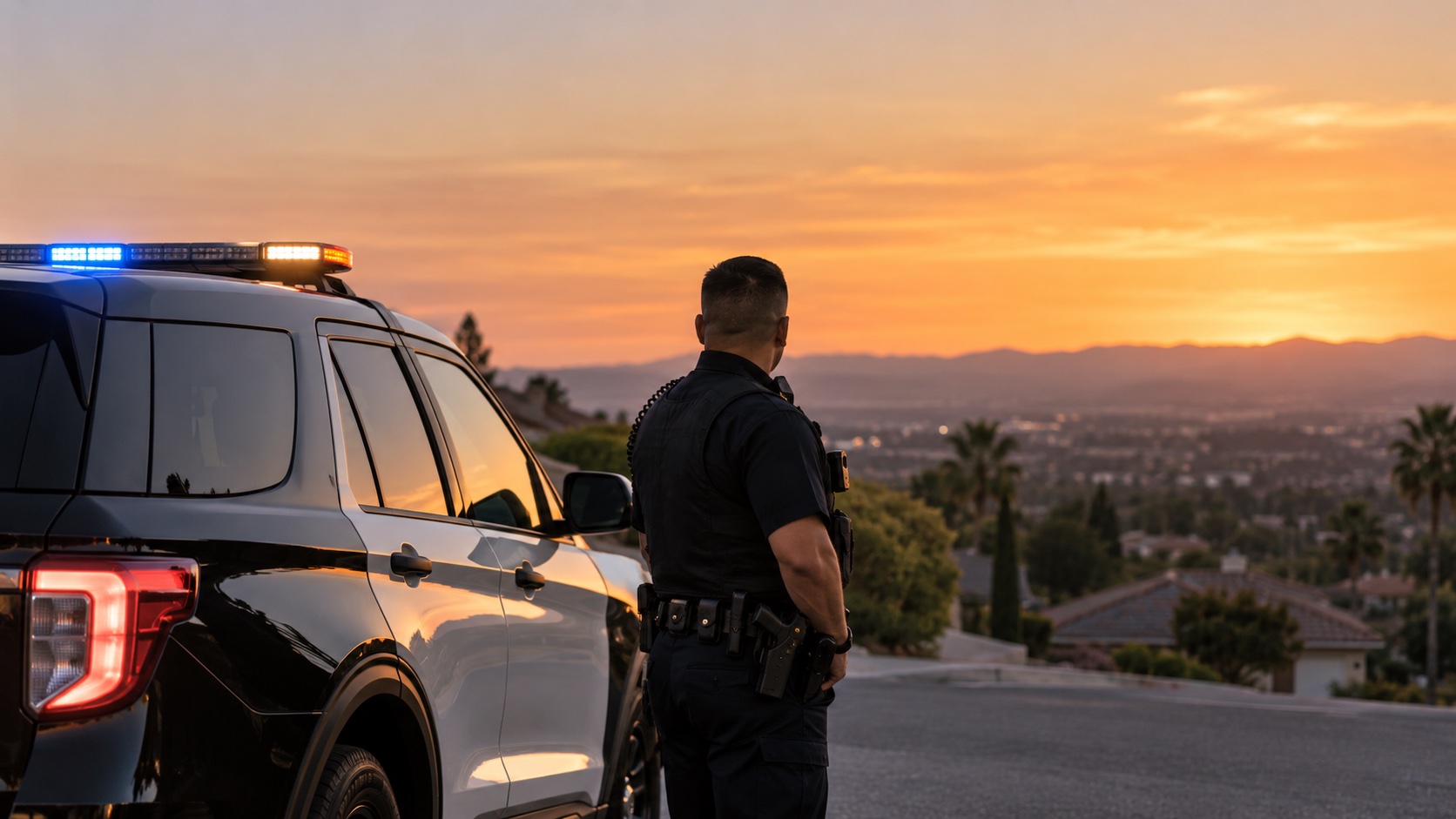
Police and the public have tens of millions of contacts a year in the United States, and about a thousand people die in police shootings. The hosts of Palavrão Tático talk about how to put the numbers and the misconduct cases in perspective — and California has its own rules to remove from the profession anyone who crosses the line.
 Episode 49 · Part 1 of 4
Multiple-choice exam, written exam, oral board, physical test, psych screening and background investigation: the process can take a year and a half. Delegado Maurício de Tomasi tells Palavrão Tático how the São Paulo Civil Police exam works, what changed in 2008 and the method he used to take on 136,000 competitors — and the hosts compare it with hiring in California.
 Episode 48 · Part 5 of 5
After Elite Squad, a lot of police units in Brazil wanted to run a course just like BOPE's. For one of the Federal District officers who came on Palavrão Tático, that's the original mistake: before building a course, a unit has to know what it is — and teach the officer to think, not just repeat movements.
 Episode 48 · Part 4 of 5
In the United States, the basic SWAT course is short on purpose: it qualifies you, it doesn't make you. The rest comes from years of training inside the team — from the command post to the tactical stack. The Palavrão Tático hosts explain to two police officers from Brazil's Federal District why the model works this way, and why so few teams in the country are full-time.
 Episode 47 · Part 3 of 5
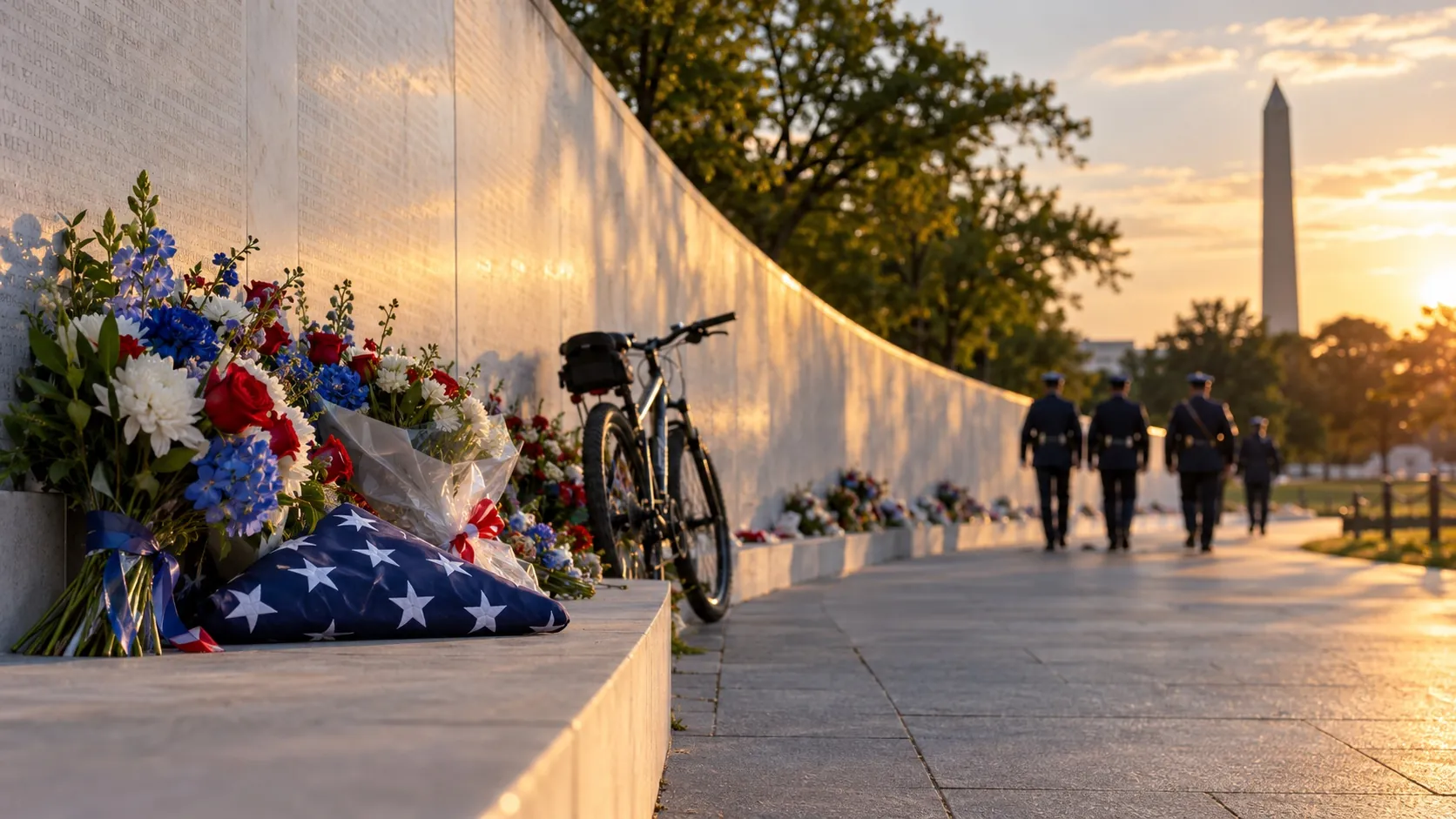
Every year in the first half of May, tens of thousands of police officers fill Washington to remember colleagues killed in the line of duty. One of the Palavrão Tático hosts rode there carrying the name of a Brazilian officer — and the conversation shows why keeping an officer's memory alive is something cops do for each other.
 Episode 46 · Part 3 of 4
Not every cop was born to be the tip of the spear, and that's no knock on anyone. Two officers from Brazil's Federal District and the hosts of Palavrão Tático talk calling, reputation and the advice they give every rookie: make yourself an asset.
 Episode 45 · Part 6 of 11
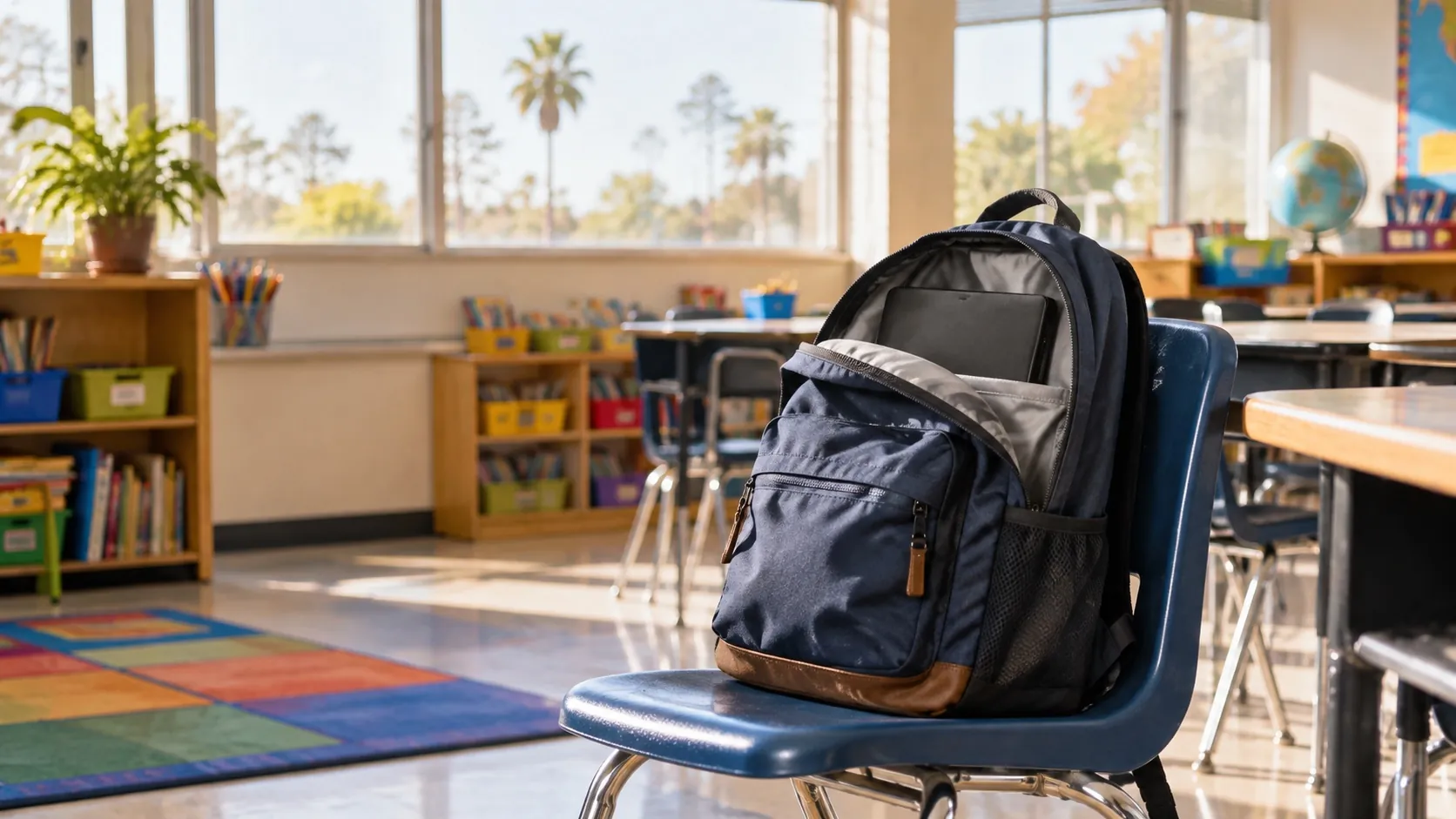
Blue blood for kids under 8, "run, hide, fight" for any emergency, and a book written with his son. An active assailant response instructor and a police officer dad explain how they prepare kids without turning school into a war zone.
 Episode 47 · Part 1 of 5
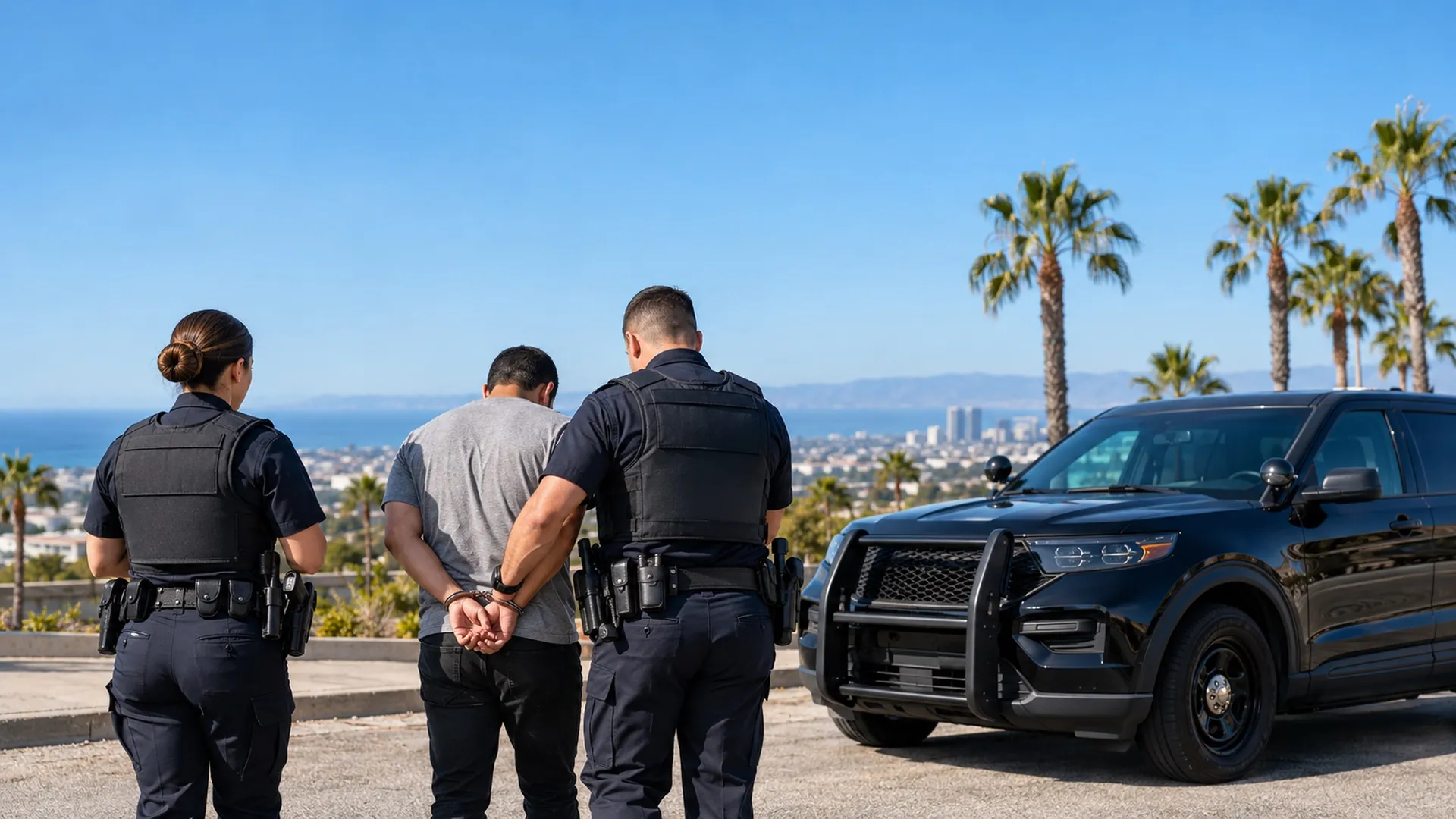
In the United States, criminal law and use-of-force rules change from one state to the next — and California is among the most restrictive. Two police officers from Brazil's Federal District share what caught them off guard: from the banned chokehold to the first class of SWAT school, which covered legal concepts.
 Episode 46 · Part 2 of 4
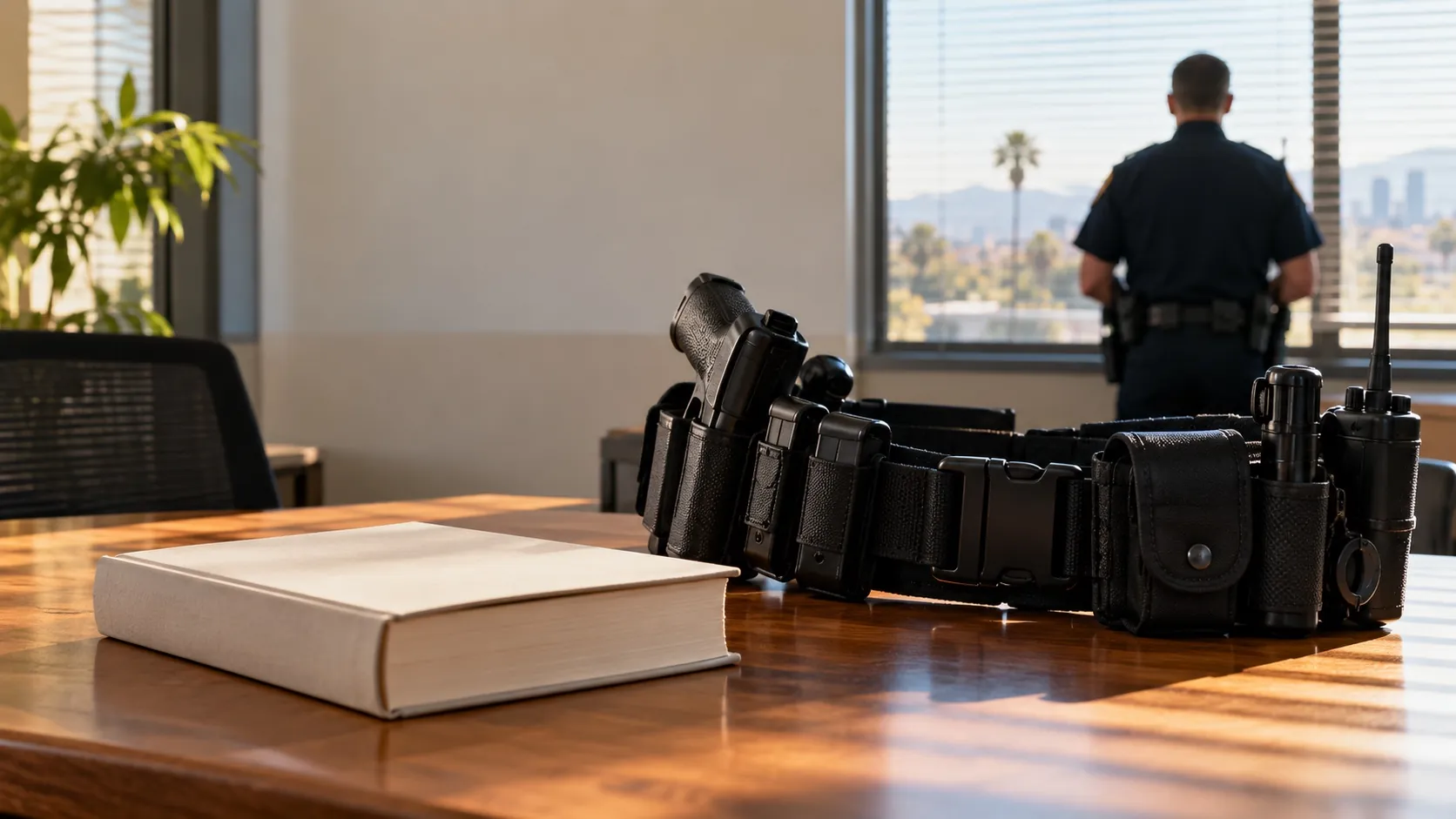
In California, the minimum is a high school diploma. In Brazil, a law degree is mandatory for delegados, but the exams for agents now favor accountants, economists and tech people. Officers from both sides explain why.
 Episode 45 · Part 3 of 11
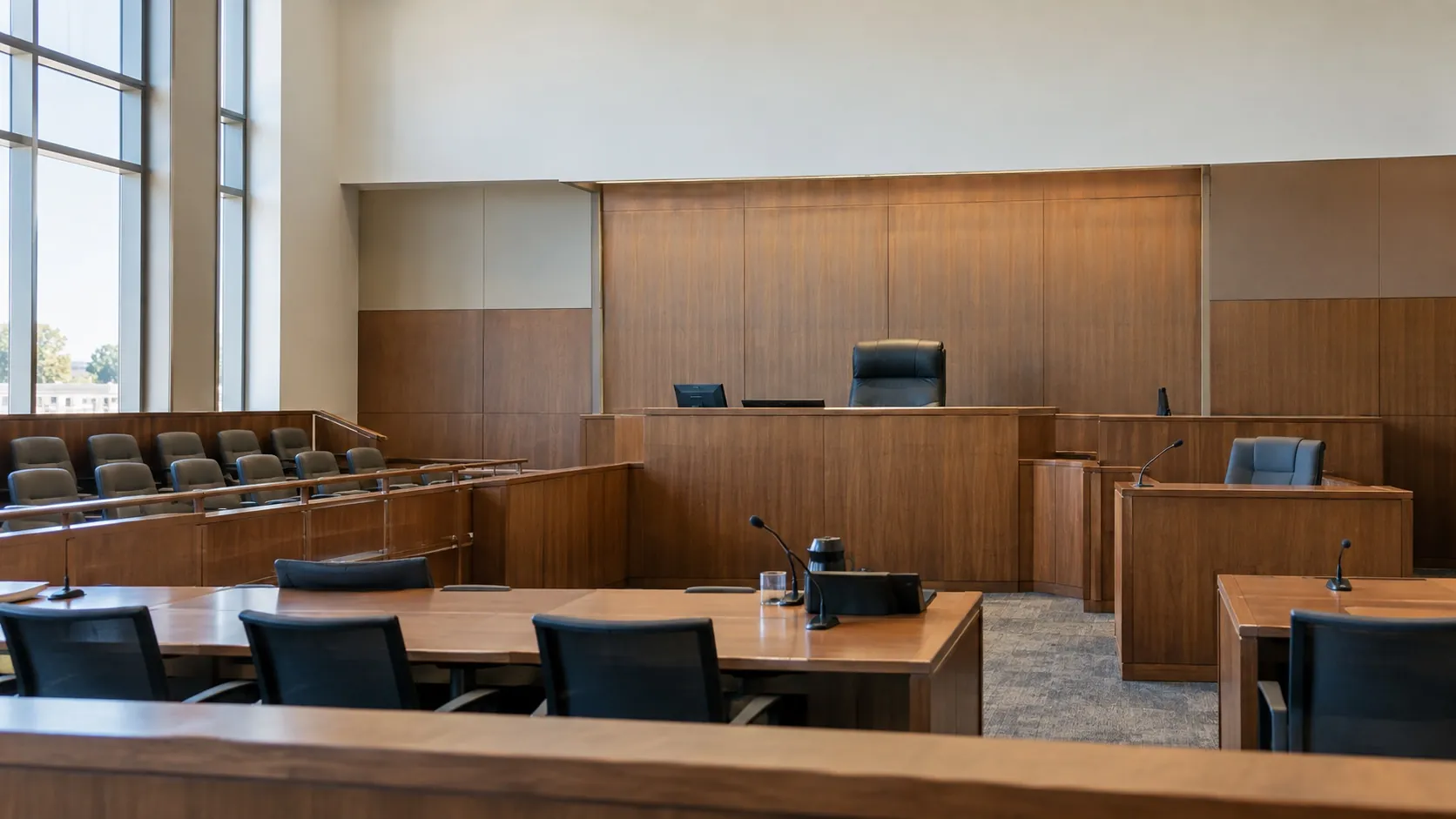
A blood warrant requested at 3 a.m., bail set by the county's own schedule, a prosecutor reached by text message, and a trial where the real target is the arresting officer's credibility. How this machinery works in California.
Episode 48 · Part 1 of 5
Police officers and firefighters from across the country arrived at the World Trade Center without knowing who was in charge. The answer to that chaos was to turn into a national standard a system California had been using since the 1970s against wildfires — ICS, which in Brazil became SCI. The hosts of Palavrão Tático and two police officers from Brazil's Federal District talk about where it came from and why it matters.
 Episode 44 · Part 2 of 4
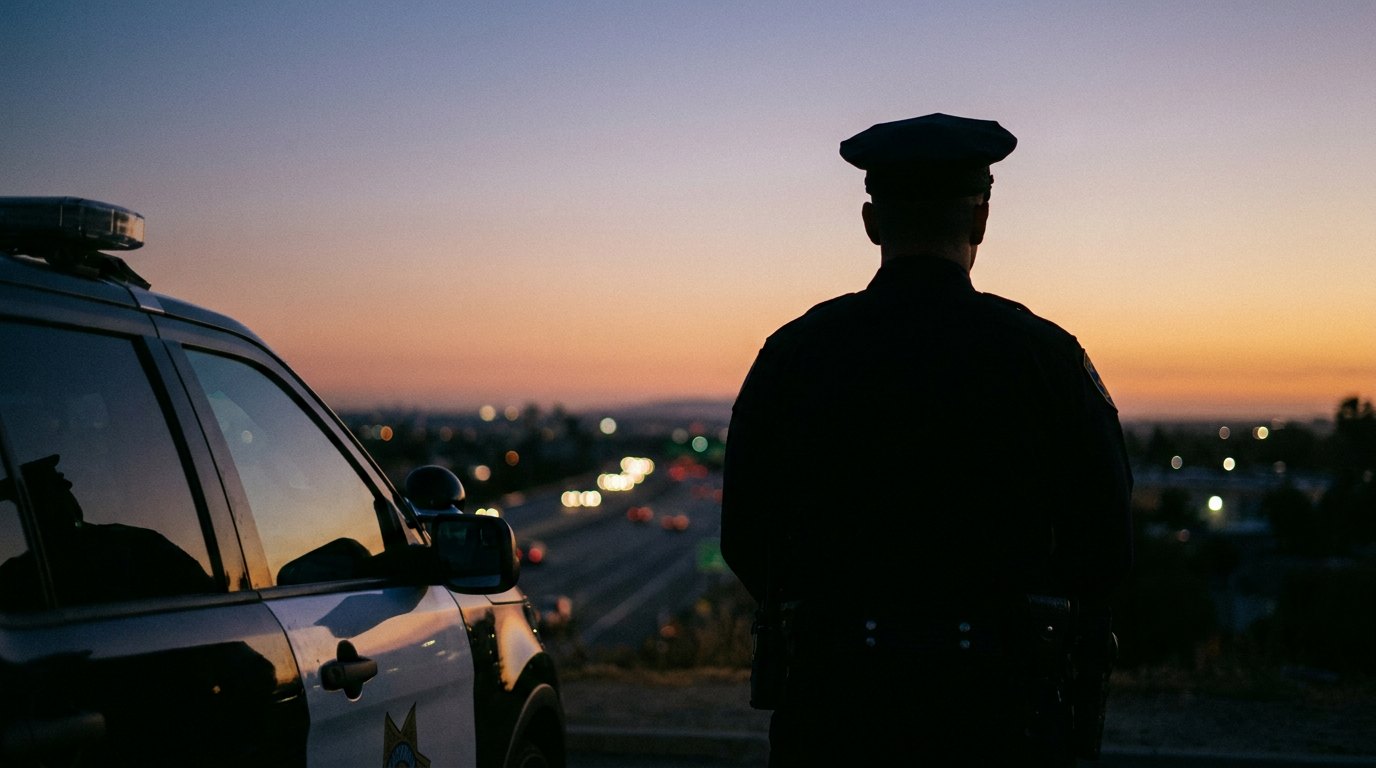
An American federal agent and former Texas state trooper tells Palavrão Tático how a stroke that went undiagnosed for years, and nearly 800 critical incidents across his career, expose a problem that American police culture — and Brazilian police culture too — still treats as weakness, not occupational health.
 Episode 43 · Part 4 of 5
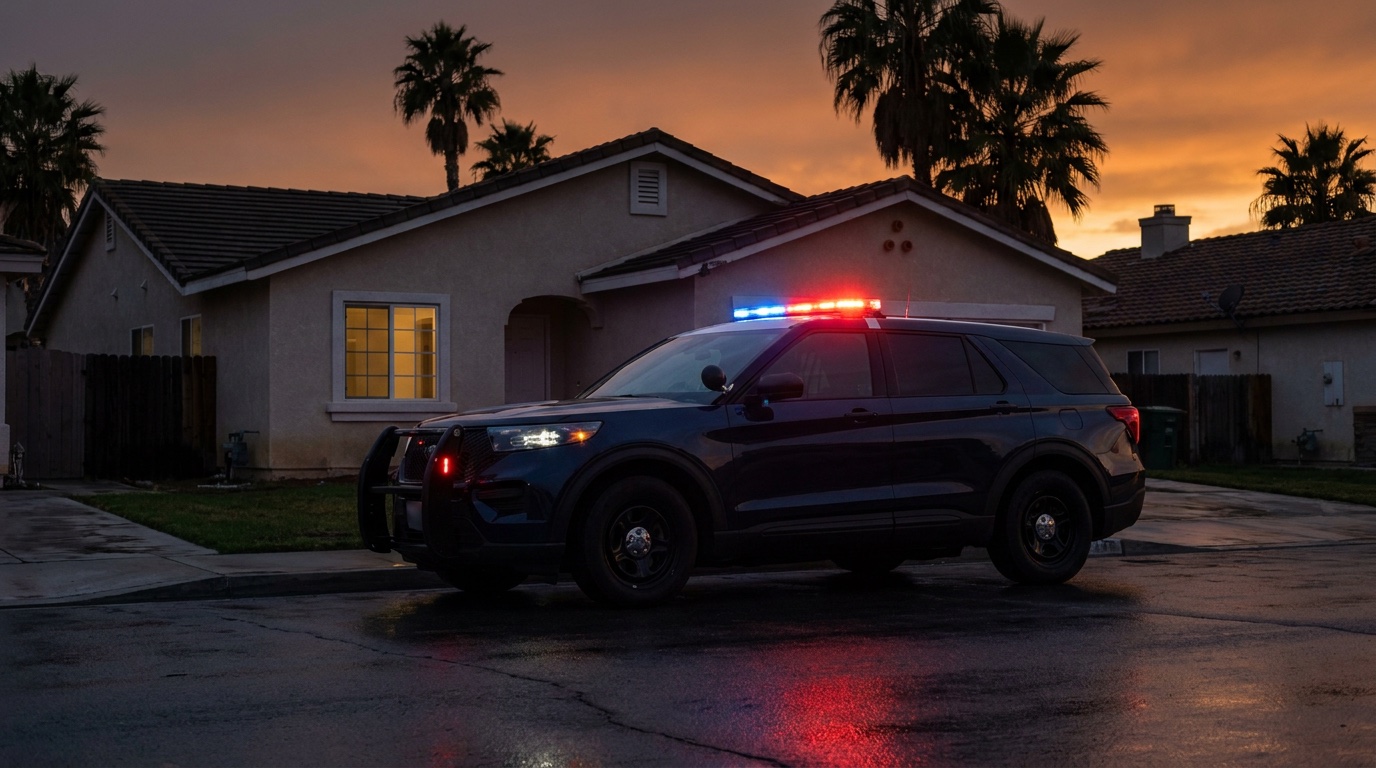
An 18-month-old baby, a baby-monitor cord, and a cop with a combat-medic background running CPR alone while the ambulance took nine minutes. The call explains why American police respond to serious medical emergencies — and names a cost the profession rarely admits to: moral injury.
Episode 47 · Part 5 of 5
Police and the public have tens of millions of contacts a year in the United States, and about a thousand people die in police shootings. The hosts of Palavrão Tático talk about how to put the numbers and the misconduct cases in perspective — and California has its own rules to remove from the profession anyone who crosses the line.
 Episode 46 · Part 4 of 4
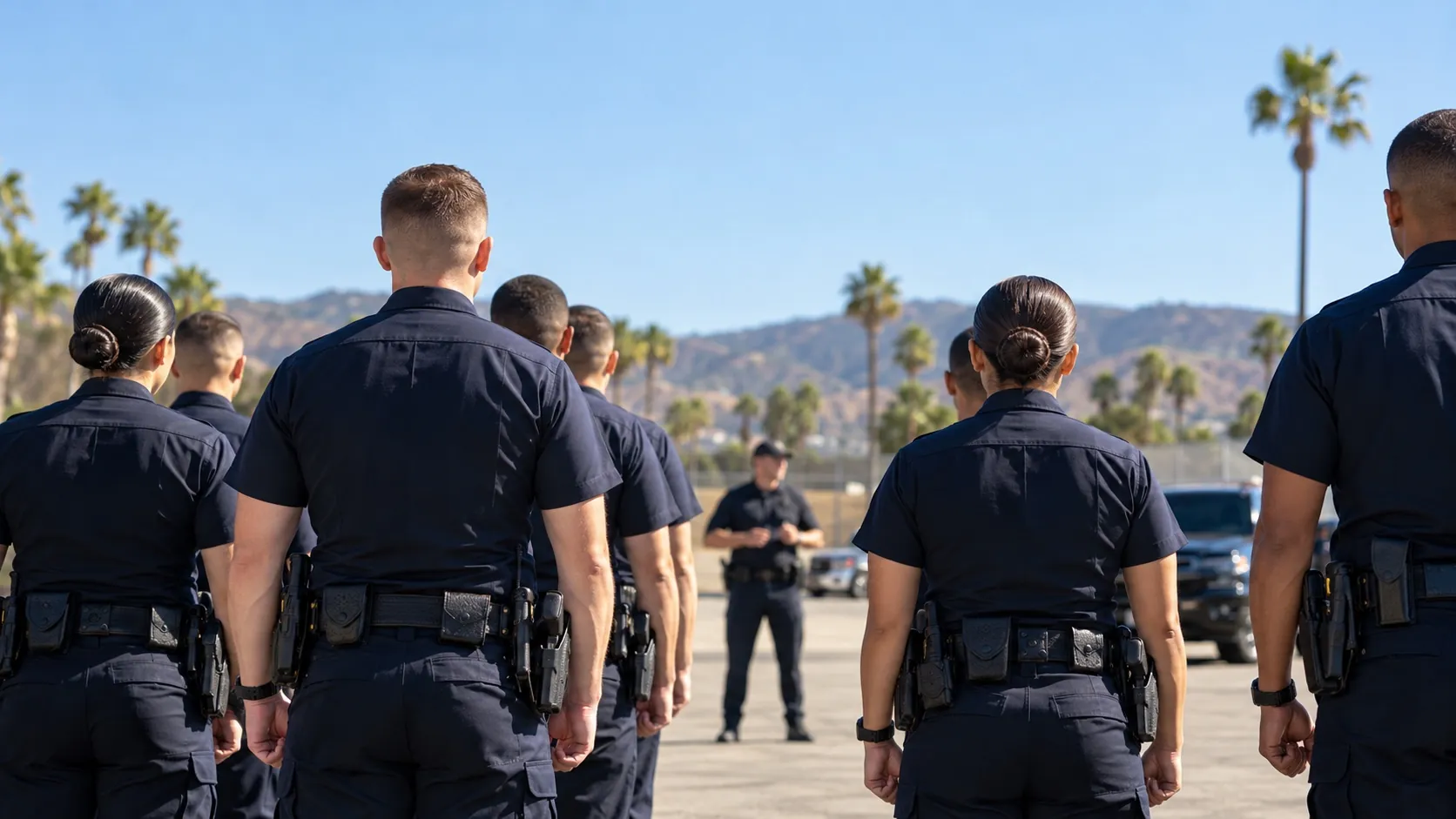
At the hiring stage, the filter is the candidate's past — and, according to officers from Brazil's Federal District, the courts overturn a good share of the disqualifications. In selection for an operational unit, though, "the mask comes off." How it works on both sides, Brazil and California.
 Episode 45 · Part 10 of 11
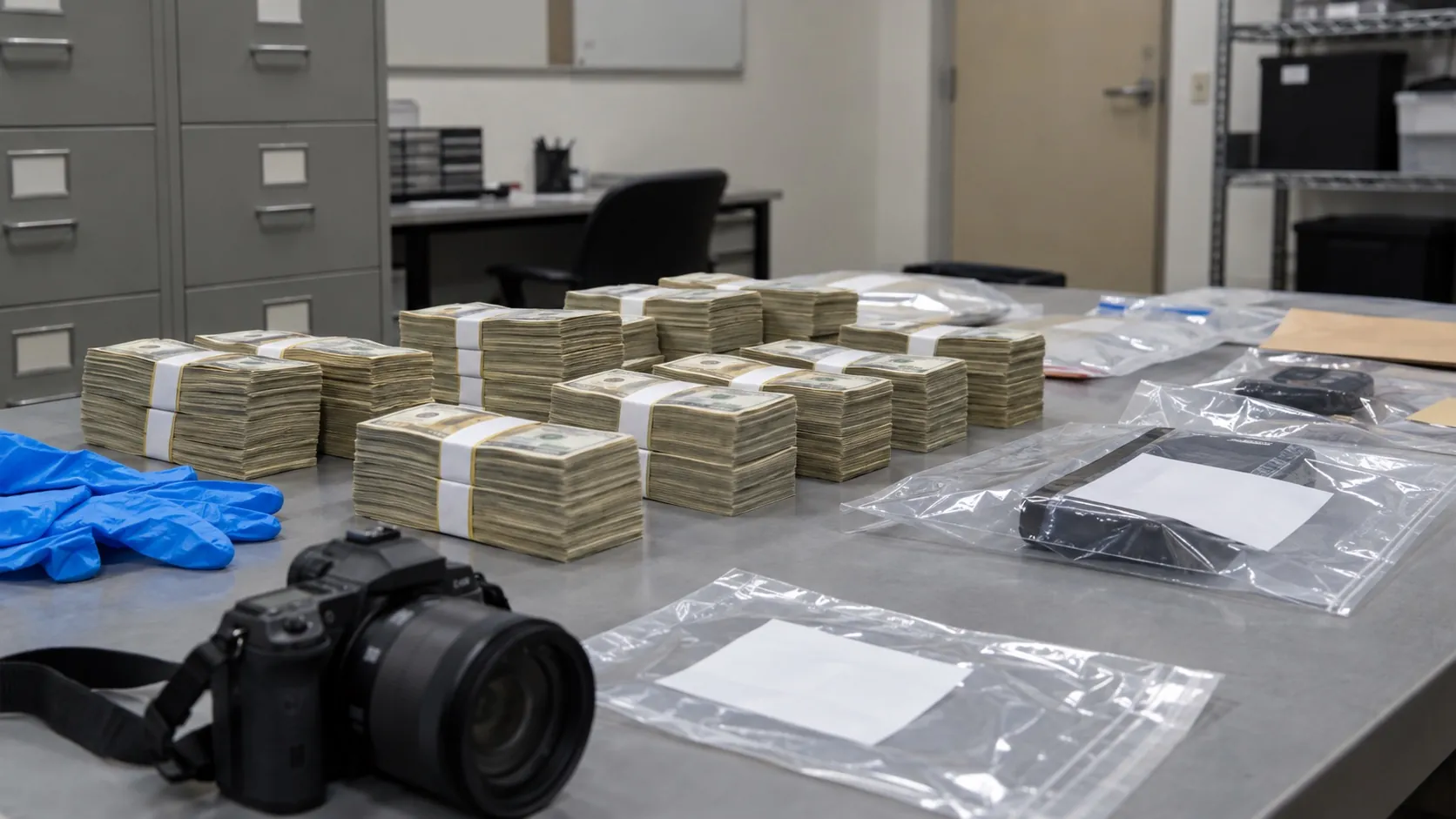
A $250,000 cash seizure with no body camera explains why a candidate's financial life carries so much weight. The hosts of Palavrão Tático talk about the background-investigation filter, "bendable" morals, and the rationalization that turns crime into justification.
 Episode 42 · Part 3 of 7
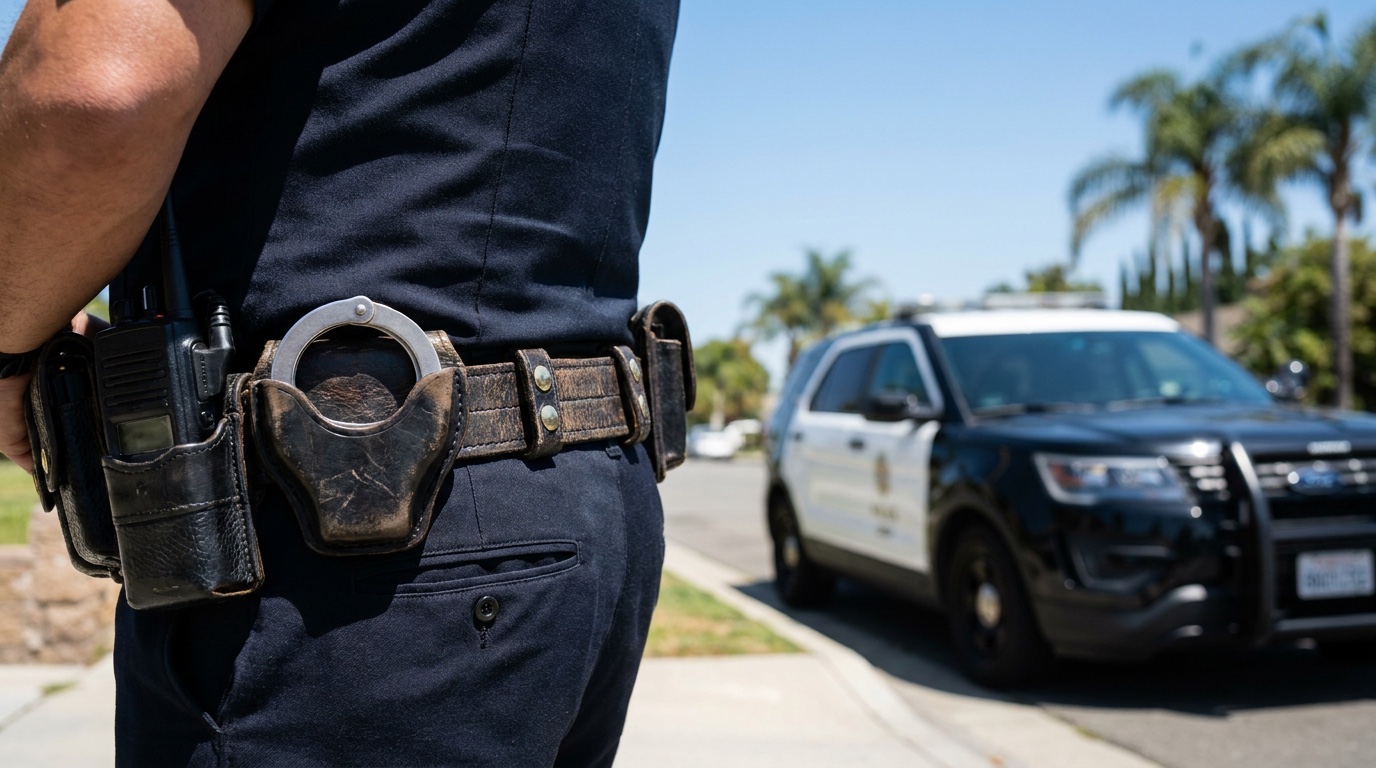
A follower of São Paulo's Public Security Department showed the hosts an American handcuff with key access on both sides of the frame. The product is real — and the reason California police turn down the convenience is what actually matters.
 Episode 39 · Part 5 of 5
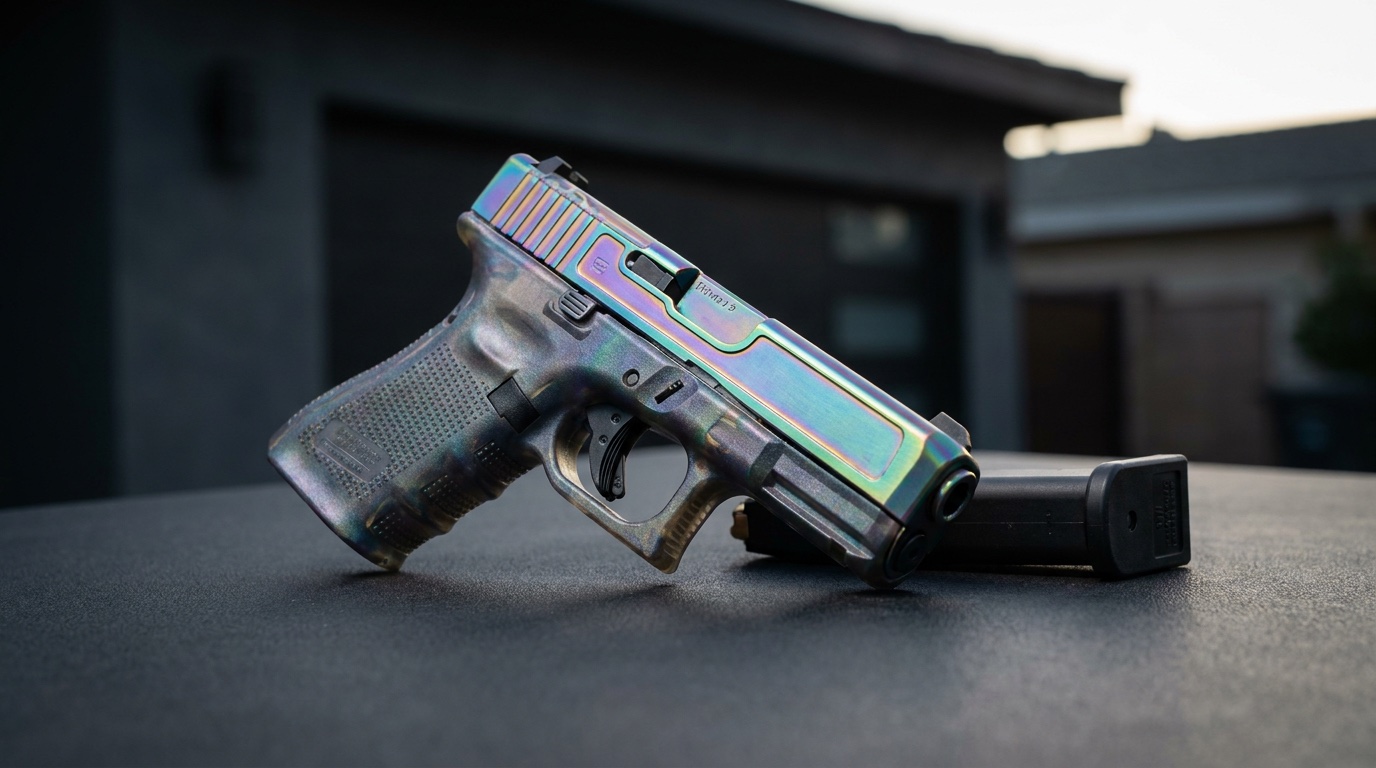
The Sig P365 Macro in a rainbow finish got the jokes going — "range queen" — but it tells a California truth: the version sold to the public comes with a manual safety and a 10-round magazine, and, depending on the department, the officer cannot even run an extended magazine off duty. Welcome to California.
 Episode 41 · Part 1 of 5
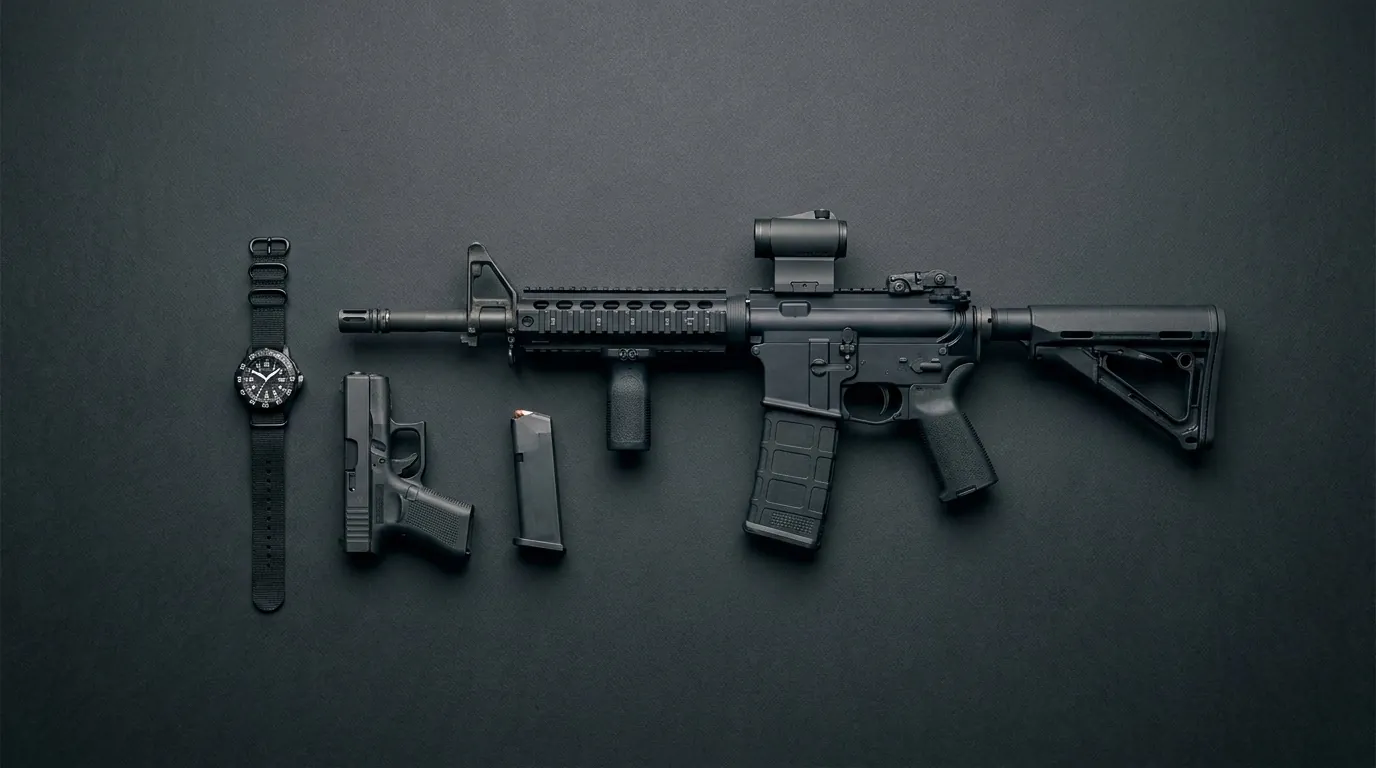
From the old G-Shock to the Apple Watch Ultra, from concealed-carry pistols (M&P Shield 2.0, Sig P365, Springfield Echelon, Canik, HK VP9) to the AR-15 built within the law — what two working officers really carry every day, and why.